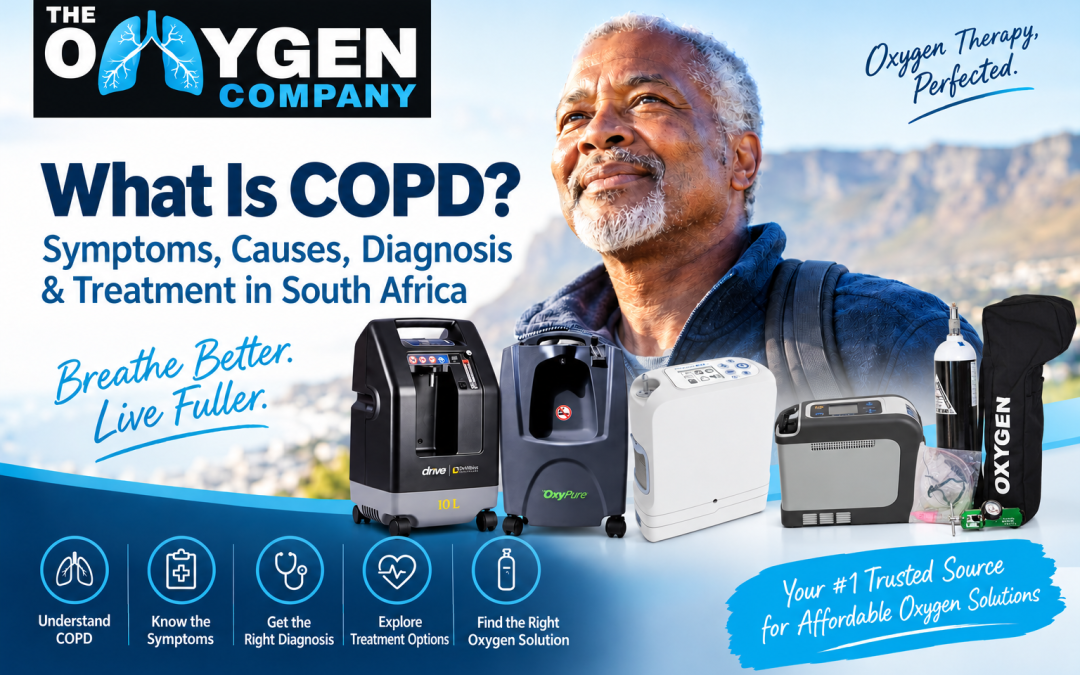
Chronic obstructive pulmonary disease (COPD) is a long-term respiratory condition that affects the lungs and can make breathing increasingly difficult. For people living with COPD, everyday activities such as walking, climbing stairs, doing household chores or even getting dressed can sometimes become challenging.
COPD is not simply a temporary breathing problem. It is a chronic condition that requires appropriate medical assessment and ongoing management.
The good news is that although COPD currently has no cure, proper treatment, lifestyle changes and appropriate respiratory support can help manage symptoms and improve quality of life.
For South Africans living with COPD, understanding the condition is an important first step towards managing it effectively.
What Does COPD Stand For?
COPD stands for Chronic Obstructive Pulmonary Disease.
It is an umbrella term generally used for long-term lung conditions that cause persistent airflow limitation. Two of the main conditions associated with COPD are:
- Emphysema
- Chronic bronchitis
These conditions can affect the lungs in different ways, but both can contribute to difficulty moving air in and out of the lungs.
Emphysema
Emphysema damages the tiny air sacs in the lungs, known as alveoli. These air sacs play an important role in transferring oxygen into the bloodstream.
When the alveoli become damaged and lose their elasticity, airflow can become restricted and the lungs may become less efficient at exchanging gases.
Chronic Bronchitis
Chronic bronchitis involves long-term inflammation of the airways and increased mucus production.
The resulting mucus and airway inflammation can make it harder for air to move freely through the lungs and may contribute to persistent coughing and breathing difficulties.
What Causes COPD?
There is no single cause of COPD. However, long-term exposure to substances that irritate and damage the lungs is an important risk factor.
Smoking
Cigarette smoking is one of the best-known risk factors for COPD.
Long-term exposure to tobacco smoke can damage the airways and lung tissue. This includes both direct smoking and, in some circumstances, prolonged exposure to second-hand smoke.
For someone who smokes and has COPD, stopping smoking is one of the most important steps they can take to protect their lung health.
Air Pollution and Occupational Exposure
People may also be exposed to substances that irritate the lungs through their homes, workplaces or surrounding environment.
These can include:
- Dust
- Chemical fumes
- Industrial pollutants
- Smoke
- Poor indoor air quality
- Occupational exposure to respiratory irritants
South Africa has a wide range of residential, industrial and occupational environments, meaning that respiratory irritant exposure can vary considerably between individuals.
Indoor air pollution can also be relevant in households where polluting fuels are used for cooking or heating. South African research has highlighted the continued presence of household exposure to polluting fuels in some communities.
Genetics
In a small number of people, genetic factors can contribute to COPD.
One example is alpha-1 antitrypsin deficiency, an inherited condition that can leave the lungs more vulnerable to damage.
Other Respiratory Conditions
Certain people with a history of other chronic respiratory conditions may also be at increased risk of developing persistent airflow problems.
Because breathing difficulties can have many possible causes, it is important not to assume that shortness of breath automatically means COPD.
What Are the Symptoms of COPD?
COPD symptoms can develop gradually, and some people may initially dismiss them as simply getting older, being unfit or having a persistent cough.
Common symptoms may include:
1. Shortness of Breath
Shortness of breath is one of the most common symptoms associated with COPD.
It may initially occur during physical activity but can become more noticeable as the condition progresses.
Someone who previously walked comfortably may find that they need to stop more frequently or rest after relatively modest activity.
2. Persistent Cough
A chronic cough can be another important warning sign.
Some people may also produce mucus or phlegm regularly.
3. Wheezing
Some people with COPD experience a whistling or wheezing sound while breathing.
4. Increased Mucus Production
Excess mucus can contribute to airway obstruction and persistent coughing.
5. Fatigue
Breathing difficulties can make everyday activities more physically demanding and may contribute to tiredness and reduced energy.
6. Frequent Flare-Ups
Some people with COPD experience periods when their symptoms suddenly become worse.
These episodes may be triggered by respiratory infections, environmental irritants or other factors and may require medical attention.
When Should You Speak to a Doctor?
Persistent coughing, unexplained breathlessness, wheezing or declining exercise tolerance should not simply be ignored.
A healthcare professional can assess your symptoms and determine whether COPD or another medical condition could be responsible.
How Is COPD Diagnosed?
COPD cannot be diagnosed reliably from symptoms alone.
A healthcare professional may consider:
- Your medical history
- Smoking history
- Occupational and environmental exposure
- Family history
- Physical examination
- Lung function testing
- Other appropriate investigations
Spirometry
One of the important tests used when assessing COPD is spirometry.
Spirometry measures how much air you can breathe in and out and how quickly you can exhale.
It can help healthcare professionals assess airflow limitation and distinguish COPD from other conditions that may cause similar symptoms.
Depending on the individual circumstances, doctors may also request imaging or blood tests to investigate other possible causes of breathing difficulties.
Can COPD Be Treated?
COPD currently has no cure, but treatment can help control symptoms, reduce exacerbations and support a person’s ability to remain active.
Treatment is individualised and should be determined by a qualified healthcare professional.
Depending on the patient’s condition, treatment may include:
- Smoking cessation
- Inhaled medicines
- Bronchodilators
- Corticosteroids in appropriate cases
- Treatment of respiratory infections
- Pulmonary rehabilitation
- Lifestyle modifications
- Oxygen therapy for patients who meet the appropriate clinical criteria
Oxygen Therapy and COPD
For some people with advanced COPD, the lungs may not provide sufficient oxygen to maintain healthy blood oxygen levels.
In these circumstances, a healthcare professional may prescribe supplemental oxygen therapy.
Oxygen therapy can be delivered using equipment such as:
- Home oxygen concentrators
- Portable oxygen concentrators
- Medical oxygen cylinders
It is important to understand that oxygen therapy is not automatically appropriate for every person with COPD.
The need for supplemental oxygen should be determined by a healthcare professional based on the patient’s clinical condition and oxygen requirements.
Home Oxygen Concentrators
For patients who require longer periods of oxygen therapy at home, an oxygen concentrator may provide a convenient source of supplemental oxygen.
An oxygen concentrator draws in room air and separates oxygen from other gases, producing concentrated oxygen for delivery to the patient.
The Oxygen Company supplies a range of home oxygen concentrators in South Africa, including:
- DeVilbiss 5 Litre Home Oxygen Concentrator
- Oxypure 5 Litre Home Oxygen Concentrator
- OxyFlow 5 Litre Home Oxygen Concentrator
- Aerti 5 Litre Home Oxygen Concentrator
- DeVilbiss Compact 10 Litre Home Oxygen Concentrator
The Oxygen Company currently lists the DeVilbiss 5 Litre at R15,999, the Oxypure 5 Litre at R14,000, the OxyFlow 5 at R14,000, and the DeVilbiss Compact 10 Litre at R33,500, although prices and availability can change.
Portable Oxygen Concentrators
COPD should not necessarily mean giving up your independence.
For patients whose prescribed oxygen therapy requirements are compatible with a portable device, a portable oxygen concentrator may make it easier to remain mobile.
The Oxygen Company supplies portable oxygen concentrators such as the Inogen Rove 6, DeVilbiss iGo2 and OxLife Independence. Current listed prices range from approximately R39,500 to R55,000, depending on the model and configuration.
Portable oxygen concentrators can be particularly useful for people who need oxygen while travelling, attending appointments or going about their daily activities.
However, not every portable oxygen concentrator is suitable for every patient. Flow requirements, oxygen delivery mode, battery capacity and whether oxygen is required during sleep must all be considered.
Oxygen Concentrators vs Oxygen Cylinders
A traditional oxygen cylinder stores a finite quantity of compressed oxygen and eventually needs to be replaced or refilled.
An oxygen concentrator works differently.
It draws air from the surrounding environment and concentrates the oxygen, meaning that it does not require routine oxygen refilling in the same way as a cylinder.
For some patients requiring long-term oxygen therapy, this can make a concentrator a practical option for home use.
The appropriate equipment, however, depends on the patient’s prescribed oxygen requirements, lifestyle and clinical circumstances.
Can Someone With COPD Travel?
Having COPD does not necessarily mean that you cannot travel.
However, travelling with a respiratory condition requires appropriate planning.
Patients who use supplemental oxygen should discuss their travel plans with their healthcare professional and determine what oxygen support they require.
For air travel, patients should also contact their airline well in advance and confirm its medical and oxygen policies.
Some portable oxygen concentrators are designed and approved for airline use. The Oxygen Company supplies FAA-approved portable oxygen concentrator options, including selected Inogen Rove 6 and DeVilbiss iGo2 configurations.
Always confirm the requirements with your airline before travelling.
Lifestyle Changes That May Help With COPD Management
Medical treatment is only one part of managing COPD.
Depending on your individual circumstances, your healthcare professional may recommend lifestyle measures such as:
Stop Smoking
If you smoke, stopping can help reduce continued exposure to tobacco smoke and protect your lungs from further damage.
Avoid Respiratory Irritants
Where possible, reduce exposure to smoke, dust, chemical fumes and other substances that aggravate your breathing.
Stay Physically Active
Your healthcare professional may recommend appropriate physical activity or pulmonary rehabilitation.
The correct level of activity varies from person to person, particularly for people with significant breathing difficulties.
Eat a Balanced Diet
Good nutrition is important for overall health and can form part of a comprehensive COPD management plan.
Follow Your Treatment Plan
Take prescribed medicines as directed and attend follow-up appointments.
If your symptoms change significantly, speak to your healthcare professional rather than changing your treatment yourself.
COPD Flare-Ups: When Symptoms Suddenly Get Worse
People living with COPD can experience periods when their usual symptoms become significantly worse.
A flare-up may involve:
- Increased breathlessness
- Increased coughing
- Changes in mucus
- Increased fatigue
- Reduced ability to perform normal activities
Respiratory infections can contribute to worsening respiratory symptoms.
If you experience a significant or sudden deterioration in your breathing, seek appropriate medical attention promptly.
Severe difficulty breathing or other emergency symptoms require urgent medical care.
Living With COPD in South Africa
A COPD diagnosis can feel overwhelming, but it does not necessarily mean that you must stop living an active and fulfilling life.
With appropriate medical care, prescribed treatment, lifestyle adjustments and the right respiratory equipment where clinically indicated, many people can continue participating in everyday activities.
The key is to understand your condition and work closely with your doctor, pulmonologist, respiratory therapist or other qualified healthcare professional.
How The Oxygen Company Can Help
At The Oxygen Company, we specialise in respiratory equipment and oxygen therapy solutions for customers throughout South Africa.
Based in Randburg, Johannesburg, we supply respiratory equipment including:
- Home oxygen concentrators
- Portable oxygen concentrators
- Medical oxygen cylinders
- Oxygen accessories
- CPAP equipment
- BiPAP equipment
- Oxygen equipment rentals
- Oxygen concentrator servicing and repairs
We understand that choosing respiratory equipment can be confusing, particularly when you are purchasing oxygen equipment for the first time.
Our team can help you understand the available equipment options based on your prescribed oxygen requirements, intended use, portability needs and budget.
We also offer nationwide delivery across South Africa.
Frequently Asked Questions About COPD
Is COPD curable?
There is currently no cure for COPD. However, appropriate treatment and lifestyle changes can help manage symptoms and improve quality of life.
Can COPD cause low oxygen levels?
COPD can affect the lungs’ ability to exchange oxygen effectively. Some patients may therefore develop low blood oxygen levels and may require supplemental oxygen if prescribed by a healthcare professional.
Does everyone with COPD need an oxygen concentrator?
No. Oxygen therapy is not required by everyone with COPD. The need for supplemental oxygen should be assessed and prescribed by an appropriately qualified healthcare professional.
What is the difference between a home and portable oxygen concentrator?
A home oxygen concentrator is generally designed for stationary use, while a portable oxygen concentrator is designed to provide greater mobility.
The correct option depends on your prescribed oxygen requirements and lifestyle.
Can I buy an oxygen concentrator without a prescription?
Although oxygen equipment may be commercially available, the decision to use supplemental oxygen should be based on appropriate medical assessment and professional guidance.
How much does an oxygen concentrator cost in South Africa?
Prices vary depending on the type, flow capacity, brand and configuration.
At the time of writing, The Oxygen Company’s listed home oxygen concentrators range from approximately R14,000 for selected 5-litre models to R33,500 for a new DeVilbiss Compact 10 Litre model, while portable models may cost more. Prices are subject to change.
Take Your Breathing Seriously
COPD is a chronic respiratory condition, but a diagnosis does not mean that you have to face it alone.
Recognising symptoms early, obtaining an accurate diagnosis and following an appropriate treatment plan can make an important difference to managing life with COPD.
If your healthcare professional has prescribed supplemental oxygen, choosing reliable oxygen equipment and having access to proper support can provide valuable peace of mind.
The Oxygen Company is here to help South Africans find reliable oxygen therapy solutions that fit their needs.
Explore Oxygen Therapy Solutions
Browse our range of home oxygen concentrators, portable oxygen concentrators, oxygen cylinders and respiratory equipment, or contact The Oxygen Company for assistance choosing the appropriate equipment for your prescribed oxygen requirements.
The Oxygen Company
Your #1 Trusted Source for Affordable Oxygen Solutions
Oxygen Therapy, Perfected.
Medical Disclaimer
This article is provided for general educational purposes and is not intended to replace medical advice, diagnosis or treatment from a qualified healthcare professional. COPD affects each person differently. Do not start, stop or change medication or oxygen therapy based solely on information contained in this article. If you are experiencing new, worsening or severe breathing difficulties, seek appropriate medical attention.
#copd #copdawareness #copdsymptoms #copdtreatment #oxygentherapy #oxygenconcentrator #medicaloxygen #respiratoryhealth #lunghealth #southafrica #theoxygencompany